Distill — ein wöchentlicher Überblick zu jedem Thema, das man nennt
Strategie & Wissen • Eigenes Produkt
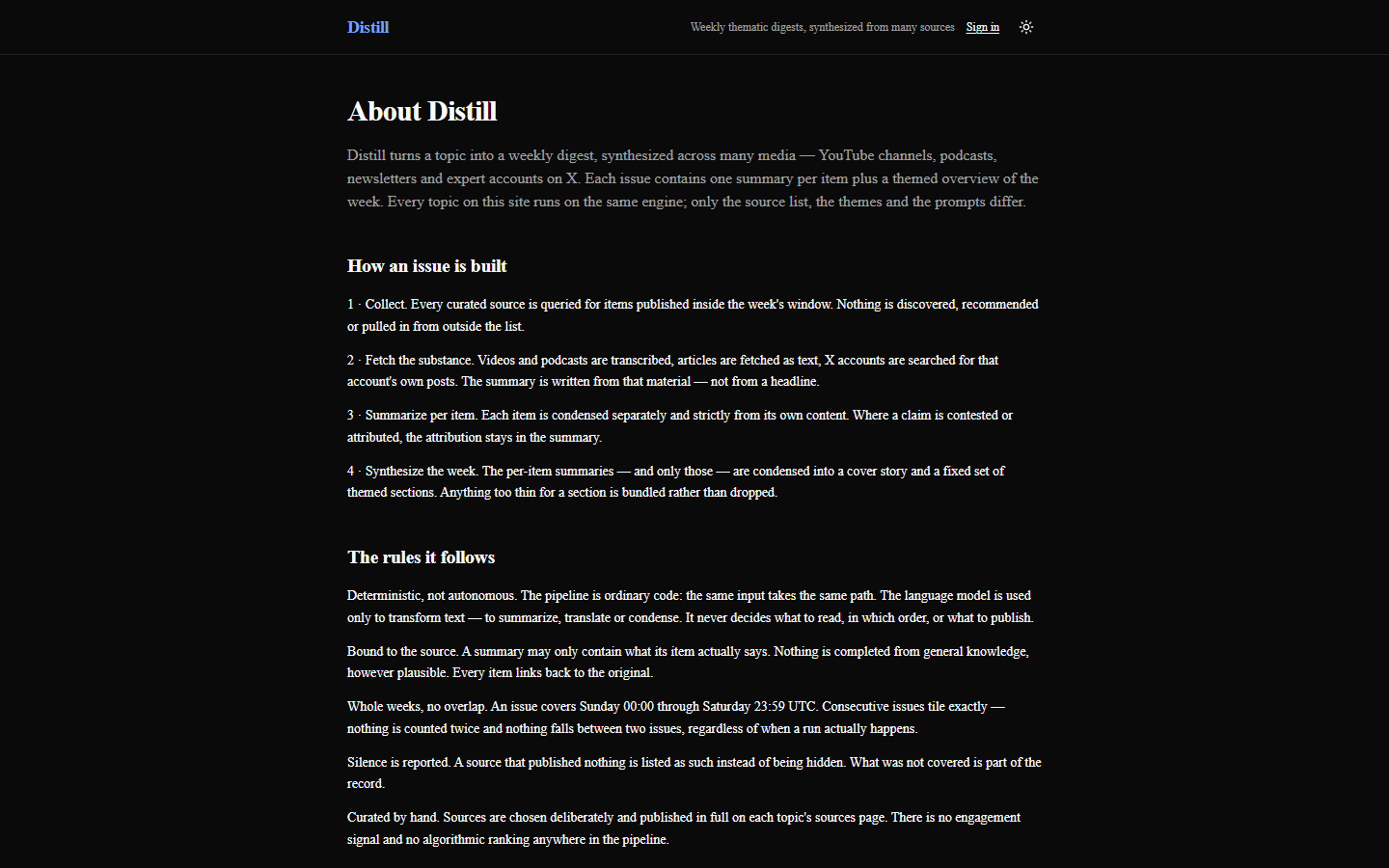
Zum Mitlesen: aidevtube.com — der Digest zur KI-Entwicklung, aus dem diese Maschine entstanden ist; erscheint wöchentlich und ist frei zugänglich.
Worum es geht
Man nennt ein Thema. Ich suche von Hand die Quellen aus, die dafür tatsächlich zählen — YouTube-Kanäle, Podcasts, Newsletter, Nachrichtenfeeds, Fachleute auf X — und von da an bekommt man einmal pro Woche eine Ausgabe: jeder Beitrag anhand seines tatsächlichen Inhalts zusammengefasst, verdichtet zu einem Themenüberblick der Woche, mit einem Link an jeder Aussage. Es ist die Antwort auf ein Problem, das die meisten Teams schlecht lösen: Das Feld, das man verfolgen muss, bringt jede Woche mehr hervor, als irgendjemand lesen kann — und wer Schlagzeilen überfliegt, erfährt, was veröffentlicht wurde, nicht, was passiert ist.
Brauchbar statt bloß automatisiert wird es durch die Disziplin darunter. Eine Zusammenfassung darf nur enthalten, was ihre Quelle tatsächlich sagt — nichts wird aus dem Allgemeinwissen des Modells ergänzt. Jede Ausgabe deckt eine ganze Woche ab, Sonntag bis Samstag, und aufeinanderfolgende Ausgaben schließen exakt aneinander an: Nichts wird doppelt gezählt, nichts fällt zwischen zwei Ausgaben. Quellen, die geschwiegen haben, werden als schweigend aufgeführt, denn was nicht behandelt wurde, gehört zum Bild. Und die Quellenliste steht vollständig dabei, jeder Eintrag mit einer Notiz dazu, was die Quelle abdeckt, wie sich ihre Texte lesen und wo man sie gegen den Strich lesen muss — die Eigenaussage eines Anbieters als solche gekennzeichnet, die Finanzierung eines Senders benannt, eine erkennbare Schlagseite offen ausgesprochen. Man kann den Digest beurteilen, weil man sieht, was er gelesen hat.
Über die Wochenausgabe hinaus wächst alles zusammen: ein durchsuchbares Archiv sämtlicher je veröffentlichter Zusammenfassungen zum Thema, ein Feed und auf Wunsch derselbe Inhalt als E-Mail, Blogbeitrag oder vertonter Podcast — die Verarbeitungskette bedient alles aus einem Lauf.
Wie ich es gebaut habe
Eine deterministische Verarbeitungskette in TypeScript, kein autonomer Agent: Dieselbe Eingabe nimmt jedes Mal denselben Weg, und das Sprachmodell wird ausschließlich dafür benutzt, ihm übergebenen Text umzuformen — zusammenfassen, verdichten, übersetzen. Jede Verzweigung, jede Reihenfolge, jeder Wiederholungsversuch ist gewöhnlicher Code. Genau das macht die Ausgabe reproduzierbar und die Fehlerfälle langweilig.
Jedes Medium ist ein Adapter hinter einer gemeinsamen Schnittstelle, eine Quelle also eine Zeile Konfiguration statt einer Codeänderung: YouTube über die Data API plus Transkripte, Podcasts über RSS plus Spracherkennung, Artikel über Feed oder Auslesen, X über eine Such-Schnittstelle. Ein ganz neues Thema ist eine einzige YAML-Datei — Quellen, Themenschnitt, Anweisungen, Zeitplan — weshalb das zweite und dritte Thema fast nichts mehr kosten. Zusammenfassungen landen beim Schreiben in einem Vektorspeicher, was das Archiv später durchsuchbar macht. Jeder Modellaufruf wird protokolliert, sodass Kosten und Qualität je Lauf messbar sind statt vermutet.
Drei Themen laufen heute darauf: der Digest zur KI-Entwicklung, aus dem es verallgemeinert wurde — rund 50 Kanäle, wöchentlich seit 2025, öffentlich unter aidevtube.com —, ein Digest zu Research und Transaktionen für die Private-Equity-Welt und ein Digest zur Kriegsberichterstattung, der ukrainische, russische, deutsche, französische und englische Quellen nebeneinanderlegt. Die letzten beiden sind kunden- und zugangsbeschränkt; den ersten kann man einfach lesen.
Besonderheiten
- Jedes Thema: Ein neuer Digest ist eine Konfigurationsdatei, kein Projekt
- Mehrere Medien in einer Ausgabe — Videos, Audioinhalte, Texte und Beiträge aus sozialen Medien gemeinsam ausgewertet
- Ganze Wochen, ohne Überschneidung und ohne Lücke, unabhängig davon, wann der Lauf tatsächlich startet
- Vollständige Quellentransparenz, einschließlich dessen, was eine Quelle taugt und was nicht
- Durchsuchbares Archiv aller Zusammenfassungen, dazu Feed, E-Mail, Blog und Podcast aus einem Lauf
Stack
TypeScript · Node · PostgreSQL · Next.js · YouTube Data API · Spracherkennung · Firecrawl · OpenRouter (Verdichtung per Sprachmodell) · pgvector (durchsuchbares Archiv) · Langfuse (Protokollierung) · Docker · Caddy